May 27 in History: Jawaharlal Nehru, Golden Gate Bridge, Bismarck and Saint Petersburg
Study important historical events associated with May 27, along with static general knowledge, examination facts, memory tricks and MCQs for government-job preparation.
These events are useful for questions covering Indian Prime Ministers, the freedom movement, famous bridges, world geography, the Second World War and major international cities. Students should pay special attention to exact dates and distinctions. For example, the Golden Gate Bridge opened to pedestrians on May 27, but regular automobile traffic began on May 28, 1937.
Quick Facts at a Glance
1. Saint Petersburg Was Founded – 1703
Foundation of Saint Petersburg
Saint Petersburg traces its foundation to May 27, 1703, when the Peter and Paul Fortress was established on Zayachy Island in the delta of the Neva River. The city was founded during the reign of Peter the Great.
The fortress was constructed to protect territory acquired by Russia during the Great Northern War. A settlement gradually developed around the fortress and became Saint Petersburg, one of Russia’s most important political, cultural and commercial centres.
Saint Petersburg later served as the imperial capital of Russia for much of the period before the capital was shifted to Moscow after the Russian Revolution.
The city was known as Petrograd from 1914 to 1924 and as Leningrad from 1924 to 1991. Its historical name, Saint Petersburg, was restored in 1991.
2. Golden Gate Bridge Pedestrian Day – 1937
The Bridge Opened Exclusively to Pedestrians
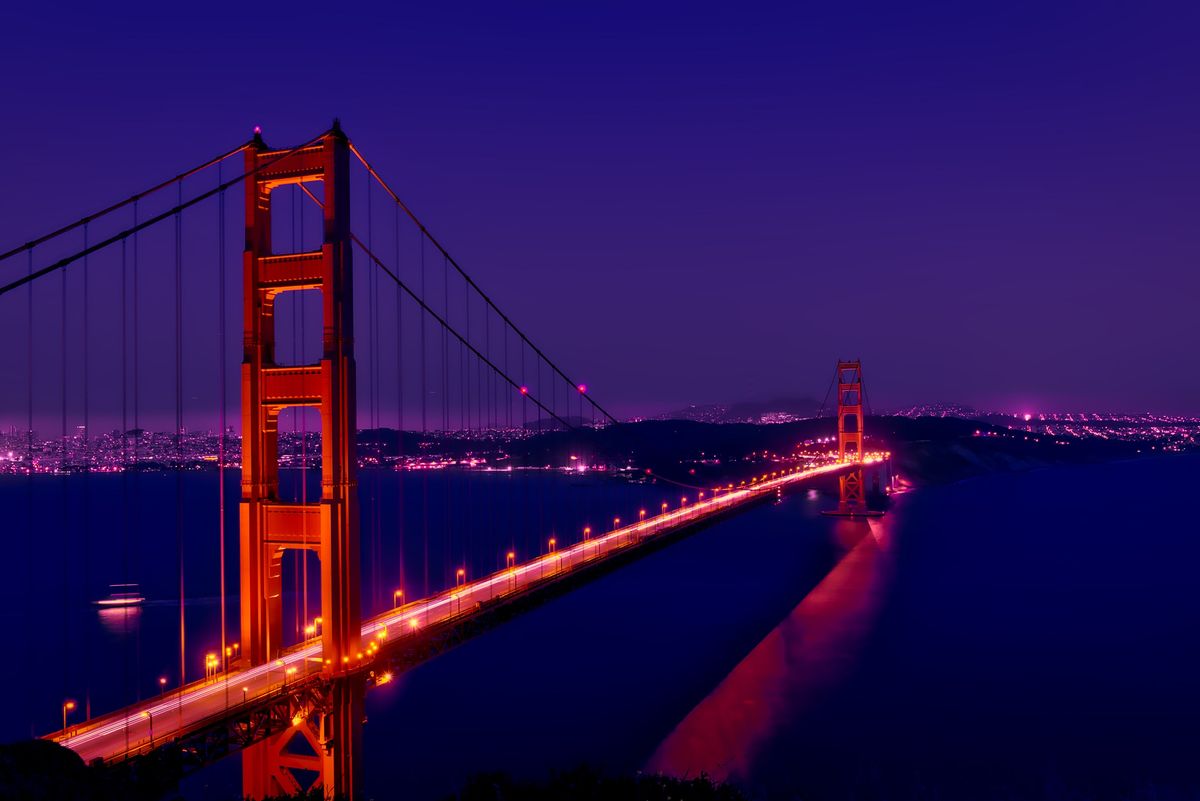
On May 27, 1937, the Golden Gate Bridge was opened exclusively to pedestrians as part of its opening celebration. The event was known as Pedestrian Day.
The roadway remained open to pedestrians from dawn to dusk. Contemporary reports estimated that as many as 200,000 people participated in the celebration.
The bridge opened to automobile traffic on the following day, May 28, 1937. United States President Franklin D. Roosevelt pressed a telegraph key at the White House as part of the official opening ceremony.
Construction began in 1933. Joseph B. Strauss served as chief engineer. Important engineering and architectural contributions were also made by Charles Alton Ellis, Leon Moisseiff and Irving Morrow.
The bridge crosses the Golden Gate Strait, which connects San Francisco Bay with the Pacific Ocean. It links the city of San Francisco with Marin County in California.
May 28, 1937: Opening to automobile traffic.
Colour: International Orange.
3. German Battleship Bismarck Sank – 1941
Final Battle of the Bismarck
The German battleship Bismarck sank in the North Atlantic on May 27, 1941, following an intensive pursuit by British naval forces during the Second World War.
Bismarck and the heavy cruiser Prinz Eugen had entered the Atlantic to attack Allied merchant shipping. On May 24, 1941, Bismarck sank the British battlecruiser HMS Hood during the Battle of the Denmark Strait.
British forces then began a major naval and aerial search. Aircraft launched from HMS Ark Royal damaged Bismarck’s steering system, limiting its ability to escape.
On May 27, British battleships and cruisers engaged the damaged vessel. Bismarck eventually sank approximately 300 nautical miles west of Ushant, France.
4. Jawaharlal Nehru Died – 1964
Death of India’s First Prime Minister
Jawaharlal Nehru, the first Prime Minister of independent India, died in New Delhi on May 27, 1964.
He served as Prime Minister from August 15, 1947 to May 27, 1964. He remains India’s longest-serving Prime Minister.
Nehru was born on November 14, 1889, in Allahabad, now known as Prayagraj. His parents were Motilal Nehru and Swarup Rani Nehru.
He studied at Harrow School and Trinity College, Cambridge, where he studied Natural Sciences. He later trained in law at the Inner Temple in London and returned to India in 1912.
Nehru became a major leader of the Indian National Congress and the freedom movement. He presided over the Congress session at Lahore in 1929, where the demand for Purna Swaraj or Complete Independence became the organisation’s objective.
After independence, Nehru played an important role in building India’s parliamentary institutions, planned economy, scientific organisations, higher-education institutions and foreign policy. Non-alignment, anti-colonialism and peaceful coexistence became important features of India’s international approach.
His period as Prime Minister also faced major challenges, including Partition-related displacement, the Kashmir conflict, economic limitations and the India–China War of 1962.
Nehru received the Bharat Ratna in 1955. His memorial, Shanti Van, is situated near Rajghat in New Delhi.
Following Nehru’s death, Gulzarilal Nanda was sworn in as interim Prime Minister on May 27, 1964.
Term: August 15, 1947–May 27, 1964
Bharat Ratna: 1955
Memorial: Shanti Van
Jawaharlal Nehru: Important Static GK
| Topic | Important Fact | Exam Keyword |
|---|---|---|
| Birth | November 14, 1889 | Allahabad, now Prayagraj |
| Parents | Motilal Nehru and Swarup Rani Nehru | Nehru family |
| Education | Harrow, Trinity College Cambridge and Inner Temple | Natural Sciences and law |
| Lahore Congress | President of the 1929 session | Purna Swaraj |
| First Prime Minister | August 15, 1947 to May 27, 1964 | Independent India |
| Foreign policy | Non-alignment and peaceful coexistence | Panchsheel |
| Civilian honour | Bharat Ratna in 1955 | Highest civilian award |
| Memorial | Shanti Van, New Delhi | Near Rajghat |
| Children’s Day | Observed in India on November 14 | Nehru’s birth anniversary |
| Successor after death | Gulzarilal Nanda served as interim Prime Minister | May 27, 1964 |
Important Books Written by Jawaharlal Nehru
May 27 Quick Revision Table
| Year | Event | Key Fact |
|---|---|---|
| 1703 | Foundation of Saint Petersburg | Peter and Paul Fortress |
| 1937 | Golden Gate Bridge Pedestrian Day | Opened to vehicles on May 28 |
| 1941 | Battleship Bismarck sank | Second World War |
| 1964 | Jawaharlal Nehru died | India’s first Prime Minister |
| 1964 | Gulzarilal Nanda became interim Prime Minister | Following Nehru’s death |
G = Golden Gate Bridge – 1937
B = Bismarck – 1941
N = Nehru – 1964
10 MCQs
Frequently Asked Questions
1. What important Indian event occurred on May 27, 1964?
Jawaharlal Nehru, India’s first Prime Minister, died in New Delhi on May 27, 1964.
2. Did the Golden Gate Bridge open to cars on May 27?
No. May 27, 1937 was reserved for pedestrians. Automobile traffic began on May 28, 1937.
3. Why is the Golden Gate Bridge orange?
Its International Orange colour contrasts with the sea, sky and surrounding hills and also improves visibility in foggy conditions.
4. What was Saint Petersburg called during the Soviet era?
The city was called Leningrad from 1924 until 1991. Its historical name, Saint Petersburg, was restored in 1991.
5. Who became Prime Minister immediately after Nehru?
Gulzarilal Nanda became interim Prime Minister after Nehru’s death. Lal Bahadur Shastri later became the regular Prime Minister.
Related Posts on Learn With Mahesh
Sources and References
- Prime Minister of India – Jawaharlal Nehru Profile
- Nehru Portal – Jawaharlal Nehru Biography
- Nehru Portal – Teen Murti House and Nehru’s Death
- Nehru Portal – Lahore Congress Session, 1929
- Ministry of Home Affairs – Bharat Ratna Recipients
- Prime Minister of India – Gulzarilal Nanda Profile
- Golden Gate Bridge – Opening Fiesta Week
- Golden Gate Bridge – Design and Construction Statistics
- Golden Gate Bridge – International Orange and Design
- Saint Petersburg Official Tourism – Peter and Paul Fortress
- Royal Navy – Sinking of Bismarck
- U.S. Naval History – Hunt and Sinking of Bismarck
Comments
Post a Comment