Article 370: History, 2019 Changes, Supreme Court Verdict & J&K Status 2026
A fact-checked student guide to Article 370, Article 35A, Jammu & Kashmir's constitutional history, the 2019 Presidential Orders, the Reorganisation Act, the Supreme Court judgment, 2024 Assembly elections and the current position as on 14 August 2026.
Article 370 was a temporary constitutional provision governing the special constitutional relationship between India and the former State of Jammu & Kashmir; through C.O. 272 and C.O. 273 in August 2019, the Constitution of India became applicable in its entirety, and the Supreme Court upheld the essential constitutional validity of the 2019 action on 11 December 2023.
Latest Position as on 14 August 2026
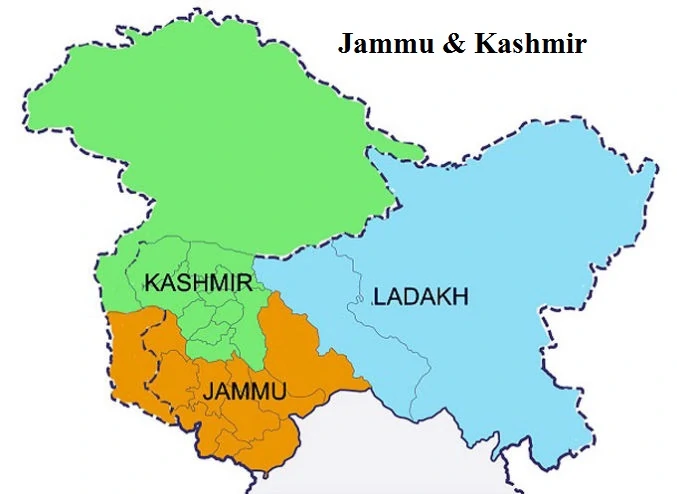
- Jammu & Kashmir is still a Union Territory with a Legislature.
- Ladakh remains a separate Union Territory without a Legislature.
- Jammu & Kashmir's statehood has not yet been restored as on 14 August 2026.
- The current Lieutenant Governor of J&K is Manoj Sinha.
- The current Chief Minister of J&K is Omar Abdullah.
- An elected Legislative Assembly has been functioning following the 2024 Assembly election.
Do not write that Jammu & Kashmir has already become a State again.
As on 14 August 2026, it continues to be a Union Territory with Legislature.
1. What Was Article 370?
Article 370 was contained in Part XXI of the Constitution of India, dealing with temporary, transitional and special provisions.
Its marginal heading described it as “Temporary provisions with respect to the State of Jammu and Kashmir.”
The provision created a special constitutional mechanism for determining how the Constitution of India and the legislative powers of Parliament would apply to the former State of Jammu & Kashmir.
It is not completely accurate to say that Article 370 simply gave J&K “complete autonomy in every matter except defence, foreign affairs and communications.”
Those subjects arose from the Instrument of Accession. Over several decades, many additional provisions of the Constitution of India were extended to Jammu & Kashmir through Presidential Orders made under Article 370.
2. Historical Background – From Accession to Article 370
In 1947, Maharaja Hari Singh, ruler of the princely State of Jammu & Kashmir, signed the Instrument of Accession to India.
The constitutional relationship that followed developed against the background of accession, conflict in the region and the political circumstances of the period.
On 17 October 1949, N. Gopalaswami Ayyangar introduced Draft Article 306A in the Constituent Assembly. Draft Article 306A later became Article 370 of the Constitution.
1947 → Accession
1949 → Draft Article 306A
1950 → Constitution of India
1954 → Presidential Order + Article 35A
Article 370 – Important Timeline
| Year / Date | Important Event |
|---|---|
| 26 Oct 1947 | Maharaja Hari Singh signed the Instrument of Accession. |
| 17 Oct 1949 | N. Gopalaswami Ayyangar introduced Draft Article 306A in the Constituent Assembly. |
| 26 Jan 1950 | Constitution of India came into force; Draft Article 306A became Article 370. |
| 14 May 1954 | Constitution (Application to Jammu and Kashmir) Order, 1954 issued; Article 35A was introduced. |
| 17 Nov 1956 | Constitution of Jammu & Kashmir was adopted. |
| 26 Jan 1957 | Constitution of Jammu & Kashmir came into force. |
| 5 Aug 2019 | C.O. 272 – Constitution (Application to Jammu and Kashmir) Order, 2019 issued. |
| 6 Aug 2019 | C.O. 273 issued under Article 370(3); the earlier clauses of Article 370 ceased to operate except for the substituted text. |
| 9 Aug 2019 | Jammu and Kashmir Reorganisation Act, 2019 received Presidential assent. |
| 31 Oct 2019 | Former State reorganised into the UT of Jammu & Kashmir and UT of Ladakh. |
| 11 Dec 2023 | Supreme Court delivered its landmark Article 370 judgment. |
| 2024 | Assembly elections were held in the UT of Jammu & Kashmir. |
| 2026 | Jammu & Kashmir continues as a Union Territory with Legislature. |
3. Article 35A – What Was It?
Article 35A was introduced through the Constitution (Application to Jammu and Kashmir) Order, 1954.
It protected laws made by the Jammu & Kashmir Legislature defining permanent residents and granting such residents special rights and privileges in areas including:
- Employment under the State Government
- Acquisition of immovable property
- Settlement in the State
- Scholarships and other forms of State aid
The 2019 Constitution Application Order superseded the 1954 Order. Consequently, Article 35A ceased to operate in its earlier form.
Article 370 → Special constitutional mechanism
Article 35A → Permanent residents and specified special rights
4. Before 2019 vs After 2019
| Before the 2019 Changes | After the 2019 Changes |
|---|---|
| Article 370 governed the special constitutional relationship with J&K. | The Constitution of India applies in its entirety without the earlier exceptions and modifications. |
| J&K had its own State Constitution. | Supreme Court has held the former J&K Constitution to be inoperative and redundant. |
| Article 35A protected laws relating to permanent residents and specified privileges. | Article 35A no longer operates under the earlier constitutional arrangement. |
| Former administrative unit was the State of Jammu & Kashmir. | The territory was reorganised into J&K UT and Ladakh UT. |
| Jammu & Kashmir was a State. | As on 14 August 2026, J&K is a Union Territory with Legislature. |
5. What Happened on 5–6 August 2019?
The constitutional change occurred through a combination of Presidential Orders, parliamentary action and the Jammu and Kashmir Reorganisation Act, 2019.
Step 1 – C.O. 272
On 5 August 2019, the President issued the Constitution (Application to Jammu and Kashmir) Order, 2019 – C.O. 272.
It superseded the Constitution (Application to Jammu and Kashmir) Order, 1954 and applied all provisions of the Constitution of India to Jammu & Kashmir.
Step 2 – Parliamentary Action
Parliament considered the statutory resolution concerning Article 370 and the legislation for reorganisation of the former State.
Step 3 – C.O. 273
On 6 August 2019, the President issued C.O. 273.
It declared that the earlier clauses of Article 370 would cease to be operative, except for a substituted provision stating in substance that all provisions of the Constitution of India would apply to Jammu & Kashmir.
“Article 370 was abrogated” is the commonly used political and exam shorthand.
Technically, C.O. 273 declared that all clauses of Article 370 would cease to operate except for the substituted text applying the Constitution of India fully.
6. Jammu and Kashmir Reorganisation Act, 2019
Parliament enacted the Jammu and Kashmir Reorganisation Act, 2019. It received the assent of the President on 9 August 2019.
The reorganisation took effect from 31 October 2019.
| Union Territory | Legislature | Important Fact |
|---|---|---|
| Jammu & Kashmir | Yes | Union Territory with Legislative Assembly |
| Ladakh | No | Union Territory without Legislature |
31 October 2019
J&K → UT WITH Legislature
Ladakh → UT WITHOUT Legislature
7. Supreme Court Judgment – 11 December 2023
A Constitution Bench of the Supreme Court of India delivered its judgment in the Article 370 cases on 11 December 2023.
The Court substantially upheld the constitutional validity of the 2019 action.
Major Findings
- The Court held that Article 370 was a temporary provision.
- The President had the power under Article 370(3) to issue the notification causing the earlier form of Article 370 to cease to operate.
- The Court upheld the validity of C.O. 273.
- It upheld the application of the entire Constitution of India to Jammu & Kashmir.
- The Court held that the former Constitution of Jammu & Kashmir became inoperative and redundant.
- It upheld the creation of Ladakh as a Union Territory.
- The Court directed the Election Commission to take steps for J&K Assembly elections.
- It stated that restoration of Jammu & Kashmir's statehood should take place at the earliest and as soon as possible.
The Supreme Court did not finally decide the broader question of whether Parliament may convert an entire State into a Union Territory.
The Court considered it unnecessary to decide that question because the Solicitor General stated that Jammu & Kashmir's statehood would be restored.
8. Jammu & Kashmir Assembly Elections 2024
Following the Supreme Court judgment, the Election Commission of India conducted elections to the Legislative Assembly of the Union Territory of Jammu & Kashmir in 2024.
The election was conducted in three phases.
The Election Commission noted that the number of Assembly constituencies had increased from 83 in the 2014 election to 90 in the 2024 election.
The elected government subsequently took office, and Omar Abdullah became Chief Minister.
Lieutenant Governor → Manoj Sinha
Chief Minister → Omar Abdullah
Status → Union Territory with Legislature
9. Has Jammu & Kashmir Statehood Been Restored?
No.
As on 14 August 2026, Jammu & Kashmir continues to be officially described by the Ministry of Home Affairs as a Union Territory with Legislature.
Therefore, although an elected Chief Minister and Legislative Assembly are functioning, the constitutional status remains that of a Union Territory, not a State.
Q. What is the present constitutional status of Jammu & Kashmir?
Answer: Union Territory with Legislature.
10. Why Was the 2019 Change Politically Contested?
Article 370 and the 2019 constitutional changes have been the subject of significant political and constitutional debate. Students should distinguish government arguments, opposing arguments and the final Supreme Court ruling.
Government's Stated Rationale
The Union Government argued that the change would promote:
- Greater constitutional integration
- Uniform application of central laws
- Extension of rights and welfare legislation
- Development and investment
- Improved governance
- Security and counter-terrorism objectives
Arguments Raised by Critics and Petitioners
Opponents of the 2019 action raised concerns including:
- Federalism and the constitutional relationship between the Union and J&K
- Whether the process could be undertaken during President's Rule
- Substitution of the role originally assigned to the J&K Constituent Assembly
- Conversion of a State into Union Territories
- Democratic representation and consent
- Communication restrictions and political detentions during the immediate period following the change
In descriptive answers, distinguish between political arguments and the legal holding of the Supreme Court. The Supreme Court's 2023 judgment is the authoritative judicial position on the constitutional questions it decided.
Article 370 – Static GK Booster
| Question Point | Correct Fact |
|---|---|
| Article 370 was in | Part XXI |
| Original nature | Temporary provision relating to Jammu & Kashmir |
| Draft Article number | 306A |
| Introduced by | N. Gopalaswami Ayyangar |
| Date introduced in Constituent Assembly | 17 October 1949 |
| Instrument of Accession signed by | Maharaja Hari Singh |
| Article 35A introduced through | Constitution (Application to Jammu and Kashmir) Order, 1954 |
| 2019 Presidential Order | C.O. 272 – 5 August 2019 |
| Declaration under Article 370(3) | C.O. 273 – 6 August 2019 |
| Reorganisation Act | Jammu and Kashmir Reorganisation Act, 2019 |
| Reorganisation effective date | 31 October 2019 |
| Supreme Court judgment date | 11 December 2023 |
| Current J&K status – Aug 2026 | UT with Legislature |
| Ladakh status | UT without Legislature |
| Current J&K Lieutenant Governor | Manoj Sinha |
| Current J&K Chief Minister | Omar Abdullah |
Easy Memory Trick
1947 → Instrument of Accession
1949 → Draft Article 306A
1954 → Article 35A / Presidential Order
2019 → C.O. 272 + C.O. 273 + Reorganisation
2023 → Supreme Court verdict
2024 → J&K Assembly election
2026 → Still UT with Legislature
Do Not Confuse
| Common Confusion | Exam-Accurate Understanding |
|---|---|
| Article 370 vs Article 35A | Article 370 created the special constitutional mechanism; Article 35A concerned permanent residents and specified rights and privileges. |
| Article 370 “deleted” from the Constitution | Common shorthand is “abrogated.” Technically, C.O. 273 caused the earlier clauses to cease to operate except for substituted text applying the Constitution fully. |
| Article 370 was a permanent provision | The Supreme Court held that Article 370 was temporary. |
| J&K is now a State | Incorrect as on 14 August 2026. J&K remains a Union Territory with Legislature. |
| J&K and Ladakh both have legislatures | J&K has a Legislature; Ladakh does not. |
| 2019 Reorganisation became effective on 5 August | Constitutional action began on 5–6 August; the two UTs formally came into existence on 31 October 2019. |
| Supreme Court ordered restoration of Article 370 | Incorrect. The Court substantially upheld the 2019 constitutional action. |
| Supreme Court ordered J&K statehood never to return | Incorrect. The Court said restoration of statehood should take place at the earliest and as soon as possible. |
10 Exam-Focused MCQs – Article 370
Select an option. The correct answer and explanation will appear automatically.
1. Article 370 was originally included in which Part of the Constitution of India?
Article 370 was placed in Part XXI dealing with temporary, transitional and special provisions.
2. What was the draft number of Article 370 in the Constituent Assembly?
N. Gopalaswami Ayyangar introduced Draft Article 306A on 17 October 1949.
3. Who introduced Draft Article 306A?
He introduced Draft Article 306A in the Constituent Assembly in October 1949.
4. Article 35A was introduced through which Presidential Order?
Article 35A was introduced through the Constitution (Application to Jammu and Kashmir) Order, 1954.
5. C.O. 272 relating to Jammu & Kashmir was issued on:
C.O. 272 is the Constitution (Application to Jammu and Kashmir) Order, 2019.
6. The former State of Jammu & Kashmir was reorganised into two Union Territories with effect from:
The Jammu & Kashmir and Ladakh Union Territories formally came into existence on this date.
7. On what date did the Supreme Court deliver its landmark Article 370 judgment?
The Supreme Court substantially upheld the constitutional validity of the 2019 action.
8. What did the Supreme Court hold regarding the nature of Article 370?
The Supreme Court relied on the text, placement, history and purpose of Article 370 in reaching this conclusion.
9. What is the present status of Jammu & Kashmir as on 14 August 2026?
Statehood has not yet been restored as on 14 August 2026.
10. Which of the following correctly describes Ladakh's current constitutional status?
The 2019 Reorganisation Act created J&K as a UT with a legislature and Ladakh as a UT without a legislature.
Quick Revision – 18 Must-Remember Points
- Article 370 was located in Part XXI of the Constitution.
- It was originally introduced as Draft Article 306A.
- Draft Article 306A was introduced by N. Gopalaswami Ayyangar.
- It was introduced on 17 October 1949.
- Maharaja Hari Singh signed the Instrument of Accession in 1947.
- Article 35A came through the 1954 Presidential Order.
- C.O. 272 was issued on 5 August 2019.
- C.O. 273 was issued on 6 August 2019.
- Jammu and Kashmir Reorganisation Act received Presidential assent on 9 August 2019.
- The reorganisation became effective on 31 October 2019.
- Jammu & Kashmir became a UT with Legislature.
- Ladakh became a UT without Legislature.
- The Supreme Court judgment came on 11 December 2023.
- The Supreme Court held Article 370 to be temporary.
- The Court upheld C.O. 273.
- The former J&K Constitution is inoperative.
- Assembly elections were held in 2024.
- As on 14 August 2026, J&K is still a Union Territory with Legislature.
Frequently Asked Questions
Was Article 370 a permanent provision?
No. Article 370 was placed in Part XXI as a temporary provision, and the Supreme Court in its 11 December 2023 judgment held that it was temporary in nature.
Who introduced Article 370 in the Constituent Assembly?
N. Gopalaswami Ayyangar introduced it as Draft Article 306A on 17 October 1949.
What happened to Article 370 on 5 August 2019?
On 5 August 2019, C.O. 272 applied the Constitution of India in its entirety to Jammu & Kashmir and superseded the 1954 Constitution Application Order. C.O. 273 followed on 6 August 2019.
What happened to Article 35A?
Article 35A had been introduced through the 1954 Constitution Application Order. The 2019 Order superseded that Order, and Article 35A no longer operates under the earlier arrangement.
Did the Supreme Court uphold the 2019 Article 370 decision?
Yes. On 11 December 2023, the Supreme Court substantially upheld the constitutional validity of the 2019 action, including C.O. 273 and the application of the entire Constitution of India to Jammu & Kashmir.
Is Jammu & Kashmir a State in 2026?
No. As on 14 August 2026, Jammu & Kashmir remains a Union Territory with Legislature.
Who is the Chief Minister of Jammu & Kashmir in August 2026?
The Chief Minister is Omar Abdullah.
Who is the Lieutenant Governor of Jammu & Kashmir?
The Lieutenant Governor is Manoj Sinha.
Official and Reliable Sources
- Supreme Court of India – In Re: Article 370 Judgment, 11 December 2023
- Legislative Department, Government of India – Constitution of India
- India Code – Jammu and Kashmir Reorganisation Act, 2019
- Ministry of Home Affairs – Jammu, Kashmir and Ladakh Affairs
- Election Commission of India – J&K Assembly Elections 2024
- Constituent Assembly Debates – 17 October 1949, Draft Article 306A
- Government of Jammu & Kashmir – Current Lieutenant Governor and Chief Minister
This article has been updated using the Supreme Court's Article 370 judgment, the current Constitution of India, India Code, Ministry of Home Affairs, Election Commission of India and Government of Jammu & Kashmir sources.
The key 2026 update is that Jammu & Kashmir remains a Union Territory with a Legislature and statehood has not yet been restored.
Conclusion
Article 370 is one of the most important topics connecting Indian constitutional history, federalism, Parliament, Presidential powers, Article 3, judicial review and contemporary current affairs .
For competitive examinations, students should not stop with the simple statement that Article 370 was “abrogated on 5 August 2019.” The complete exam sequence is more useful:
The most important current-affairs fact is: Jammu & Kashmir has an elected Legislative Assembly and Chief Minister, but it has not yet regained State status as on 14 August 2026.
Educational Disclaimer: This post is prepared for Indian Polity, Constitution and competitive-examination revision. Political arguments have been distinguished from judicial findings. Current office-holders and constitutional status are stated as verified on 14 August 2026 and should be rechecked for future examinations if the status changes.
Comments
Post a Comment