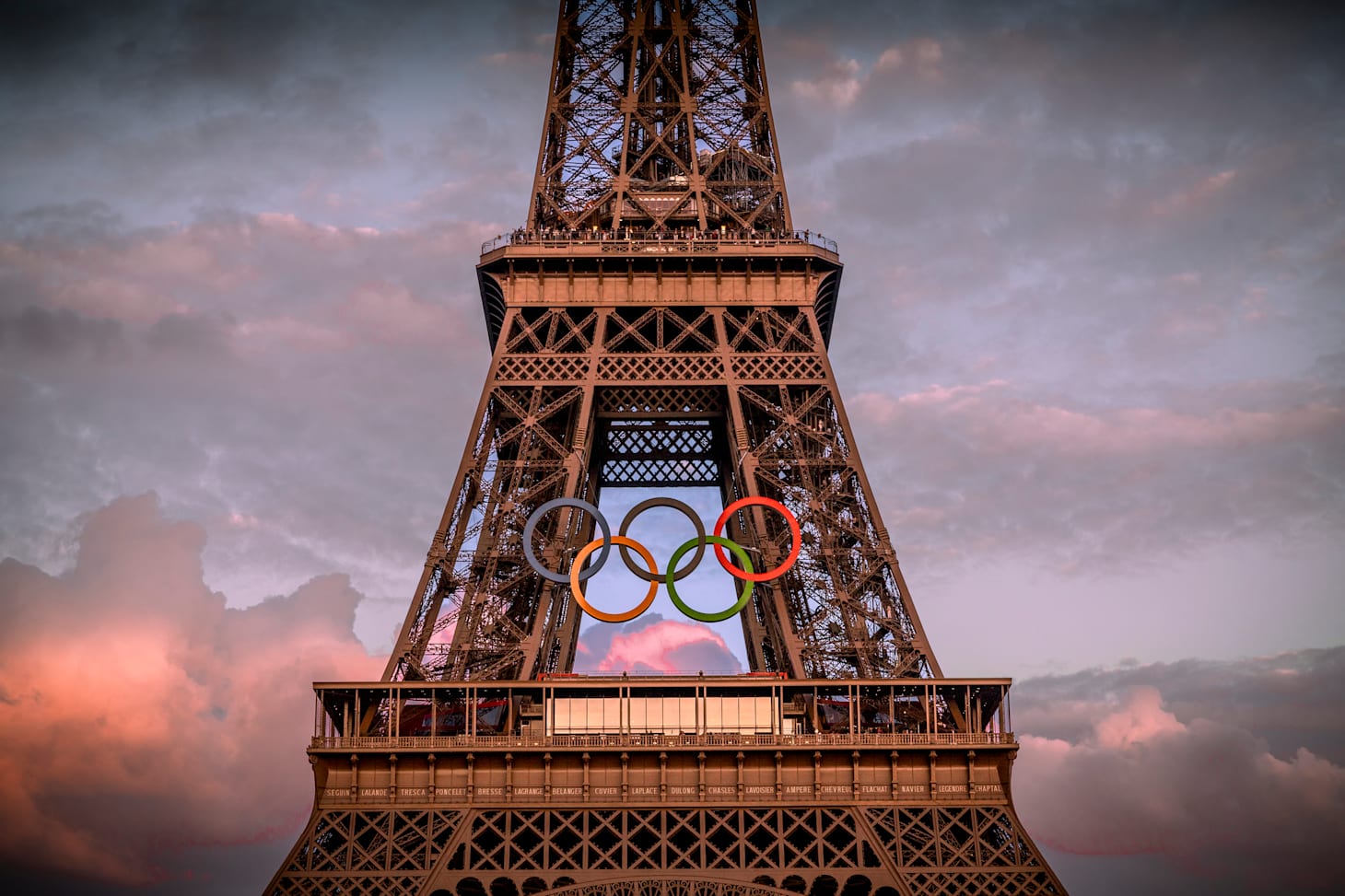
Olympic Rings: History, Meaning, Colours & Important Facts
A fact-checked student guide to Pierre de Coubertin, the five interlocking Olympic rings, their colours, symbolism, the Olympic flag, Antwerp 1920, Olympic values, motto and important exam facts.
The five interlocking Olympic rings, designed by Pierre de Coubertin in 1913, symbolise the international character of the Olympic Movement, the union of five continents and athletes coming together from around the world.
Introduction – What Do the Olympic Rings Mean?
The Olympic rings are among the most recognised symbols in international sport. They consist of five interlocking rings and represent the global nature of the Olympic Movement.
The symbol was designed by Pierre de Coubertin, founder of the modern Olympic Movement, in 1913.
The five rings represent the union of the five continents associated with the Olympic Movement and the meeting of athletes from throughout the world at the Olympic Games.
A common GK claim says:
Blue = Europe
Yellow = Asia
Black = Africa
Green = Oceania
Red = America
This colour-to-continent mapping is not the official IOC meaning.
The five rings collectively represent the five continents. No individual ring colour is officially assigned to any particular continent.
Olympic Rings – Quick Facts at a Glance
| Topic | Important Exam Fact |
|---|---|
| Symbol | Five interlocking Olympic rings |
| Designer | Pierre de Coubertin |
| Designed / publicly presented | 1913 |
| Number of rings | 5 |
| Ring colours | Blue, Yellow, Black, Green and Red |
| Background of Olympic flag | White |
| Total colours including background | 6 |
| Meaning of five rings | Union of the five continents and international participation in the Olympic Movement |
| First appearance at an Olympic Games | Antwerp 1920 |
| Antwerp 1920 host country | Belgium |
| Founder of modern Olympic Movement | Pierre de Coubertin |
1. Who Designed the Olympic Rings?
The Olympic rings were created by Baron Pierre de Coubertin, the French educator and sports administrator who played the central role in reviving the modern Olympic Games.
Coubertin designed the five-ring symbol in 1913. IOC historical material records that the rings appeared that year in his correspondence and were publicly presented as a symbol of the expanding international Olympic Movement.
Coubertin → 1913 → Five Rings
2. What Are the Five Colours of the Olympic Rings?
The five colours used in the familiar Olympic symbol are:
🔵 Blue
🟡 Yellow
⚫ Black
🟢 Green
🔴 Red
The Olympic flag places the five coloured rings on a white background.
Therefore, when the white background is included, the traditional Olympic flag uses six colours.
3. Why Were These Colours Chosen?
Pierre de Coubertin selected the five ring colours together with the white background because, at the time the symbol was created, at least one of those six colours appeared in the national flag of every participating country.
Blue + Yellow + Black + Green + Red + White Background
The colours were selected for their broad representation across national flags; they were not officially assigned one-by-one to individual continents.
4. What Do the Five Rings Represent?
The five interlocking rings represent the union of five continents and the international gathering of athletes through the Olympic Games.
In the traditional Olympic framework, the five continental areas are generally described as:
| S.No. | Continental Region |
|---|---|
| 1 | Africa |
| 2 | The Americas |
| 3 | Asia |
| 4 | Europe |
| 5 | Oceania |
“Blue ring means Europe”
“Yellow ring means Asia”
“Black ring means Africa”
“Green ring means Oceania”
“Red ring means America”
The IOC specifically clarifies that no particular colour represents a particular continent.
5. Olympic Rings vs Olympic Flag
The Olympic rings are the symbol itself. The Olympic flag consists of the five interlocking rings displayed on a white background.
The Olympic flag was created in the early years following the design of the rings and became one of the central visual symbols of the Olympic Movement.
| Olympic Rings | Olympic Flag |
|---|---|
| Five interlocking rings | Five Olympic rings displayed on a white field |
| Designed by Pierre de Coubertin in 1913 | Created as an official flag of the Olympic Movement |
| Olympic symbol | Flag carrying the Olympic symbol |
6. When Were the Olympic Rings First Used at the Games?
The Olympic rings made their first appearance at the Olympic Games at Antwerp 1920 in Belgium.
At Antwerp, the Olympic flag featuring the five rings was displayed in the Olympic stadium, helping establish the symbol as one of the defining visual identities of the modern Games.
1913 → Olympic Rings designed
1920 → Rings appear at Antwerp Olympic Games
Watch and Revise
7. Pierre de Coubertin – Important Static GK
Pierre de Coubertin was a French educator and sports administrator closely associated with the revival of the modern Olympic Games.
| Question Point | Answer |
|---|---|
| Full name commonly used | Baron Pierre de Coubertin |
| Nationality | French |
| Associated with | Revival of the modern Olympic Games |
| Designed | Olympic Rings |
| Year rings designed | 1913 |
| First Modern Olympic Games | Athens 1896 |
8. Olympic Values – Very Important for Exams
The Olympic Movement identifies three fundamental Olympic values:
E-R-F = Excellence – Respect – Friendship
9. Olympic Motto – Updated Current Version
The traditional Olympic motto was:
Faster – Higher – Stronger
In 2021, the International Olympic Committee approved the addition of the idea of “Together”.
Citius, Altius, Fortius – Communiter
Faster, Higher, Stronger – Together
Older books may give only “Faster, Higher, Stronger.” For questions asking the current Olympic motto, remember: Faster, Higher, Stronger – Together.
Olympic Static GK Booster
| Question Point | Correct Answer |
|---|---|
| Olympic rings designed by | Pierre de Coubertin |
| Olympic rings designed in | 1913 |
| Number of Olympic rings | 5 |
| Five colours | Blue, Yellow, Black, Green, Red |
| Olympic flag background | White |
| First Games appearance of rings | Antwerp 1920 |
| Antwerp is in | Belgium |
| First Modern Olympic Games | Athens 1896 |
| Current Olympic motto | Faster, Higher, Stronger – Together |
| Three Olympic values | Excellence, Respect, Friendship |
| Do individual ring colours represent continents? | No official colour-to-continent mapping |
Easy Memory Tricks
B – Y – B – G – R
Blue
Yellow
Black
Green
Red
Think: “Blue Yellow Black Green Red”
1896 → 1913 → 1920
1896 → First Modern Olympics, Athens
1913 → Olympic Rings designed
1920 → Olympic Rings appear at Antwerp Games
Do Not Confuse
| Common Claim / Confusion | Exam-Accurate Fact |
|---|---|
| “Each Olympic ring colour represents a particular continent.” | Incorrect. The five rings collectively represent the five continents. No official IOC colour-to-continent assignment exists. |
| Olympic Rings created in 1896 | Incorrect. The first modern Olympics were in 1896; the rings were designed in 1913. |
| Olympic Rings first appeared at Athens 1896 | Incorrect. Their first Olympic Games appearance was at Antwerp 1920. |
| Five colours means five total colours on the flag | The rings use five colours, but including the white background, the traditional flag uses six colours. |
| Olympic Rings vs Olympic Flag | Rings = Olympic symbol; Olympic flag = rings displayed on a white background. |
| Old Olympic motto | Faster, Higher, Stronger |
| Current Olympic motto | Faster, Higher, Stronger – Together |
10 Exam-Focused MCQs – Olympic Rings
Select an option. The answer and explanation will appear automatically.
1. Who designed the Olympic rings?
Pierre de Coubertin designed the Olympic rings in 1913.
2. In which year were the Olympic rings designed?
Pierre de Coubertin created the five-ring Olympic symbol in 1913.
3. How many rings are there in the Olympic symbol?
The Olympic symbol consists of five interlocking rings.
4. Which of the following is NOT a colour of an Olympic ring?
The five ring colours are blue, yellow, black, green and red.
5. The Olympic rings first appeared at an Olympic Games in:
The five-ring Olympic flag was used at the Antwerp Games in Belgium in 1920.
6. Which statement about Olympic ring colours is correct?
The five rings collectively represent the five continents. The IOC does not assign each colour to a particular continent.
7. What is the background colour of the Olympic flag?
The traditional Olympic flag displays the five coloured rings on a white field.
8. Antwerp, where the Olympic rings first appeared at the Games, is located in:
Antwerp hosted the 1920 Summer Olympic Games in Belgium.
9. Which are the three fundamental Olympic values?
These are the three fundamental values promoted by the Olympic Movement.
10. What is the current English Olympic motto?
The IOC approved the addition of “Together” to the Olympic motto in 2021.
Quick Revision – 15 Must-Remember Points
- The Olympic symbol contains five interlocking rings.
- The Olympic rings were designed by Pierre de Coubertin.
- They were designed in 1913.
- The five colours are Blue, Yellow, Black, Green and Red.
- The Olympic flag has a white background.
- The rings collectively represent five continents.
- No individual ring colour officially represents a particular continent.
- The rings symbolise the international nature of the Olympic Movement.
- The Olympic rings first appeared at the Games at Antwerp 1920.
- Antwerp is in Belgium.
- The first modern Olympic Games were held at Athens in 1896.
- Pierre de Coubertin is closely associated with the revival of the modern Olympic Games.
- The three Olympic values are Excellence, Respect and Friendship.
- The traditional motto was Faster, Higher, Stronger.
- The current motto is Faster, Higher, Stronger – Together.
Frequently Asked Questions
Who designed the Olympic rings?
The Olympic rings were designed by Pierre de Coubertin in 1913.
What are the five colours of the Olympic rings?
The five colours are blue, yellow, black, green and red.
What do the five Olympic rings represent?
The five rings collectively represent the union of the five continents and the worldwide character of the Olympic Movement.
Does each Olympic ring colour represent a different continent?
No. The International Olympic Committee does not officially assign a particular ring colour to a particular continent. The five rings collectively represent the five continents.
When were the Olympic rings first used at the Olympic Games?
The Olympic rings first appeared at an Olympic Games at Antwerp 1920 in Belgium.
What is the current Olympic motto?
The current Olympic motto is “Faster, Higher, Stronger – Together”. The word “Together” was added in 2021.
Reliable Sources and References
- International Olympic Committee – Olympic Rings
- International Olympic Committee – Olympic Flag
- IOC – 1913 First Public Presentation of the Five Rings Symbol
- Olympics.com – Do Olympic Ring Colours Represent Continents?
- Olympics.com – Antwerp 1920 Olympic Games
- International Olympic Committee – Pierre de Coubertin
- International Olympic Committee – Olympic Values
- International Olympic Committee – Olympic Motto
This article was reviewed and updated on 14 August 2026 using official International Olympic Committee and Olympics.com material.
The major correction is the removal of the widely circulated but inaccurate claim that each Olympic ring colour officially represents a particular continent.
Conclusion
The Olympic rings are much more than a decorative sports logo. Designed by Pierre de Coubertin in 1913, the five interlocking rings represent the international character of the Olympic Movement and the coming together of athletes from across the world.
For competitive examinations, remember the sequence:
Above all, remember the most important correction: the five rings represent the five continents collectively; individual colours are not officially linked to individual continents.
Educational Disclaimer: This article is prepared for Sports GK, Static GK and competitive-examination revision using official Olympic Movement sources. Historical myths and outdated interpretations have been corrected for exam clarity.
Comments
Post a Comment