Curie Family Nobel Prizes: Marie, Pierre, Irène & Frédéric
Student & Competitive Exam Edition: Learn how the Curie and Joliot-Curie family transformed the study of radioactivity and produced four individual Nobel laureates, with Marie Curie becoming the first person ever to receive two Nobel Prizes.
General Science Nobel Prize GK Physics Chemistry APPSC SSC RRB Police Exams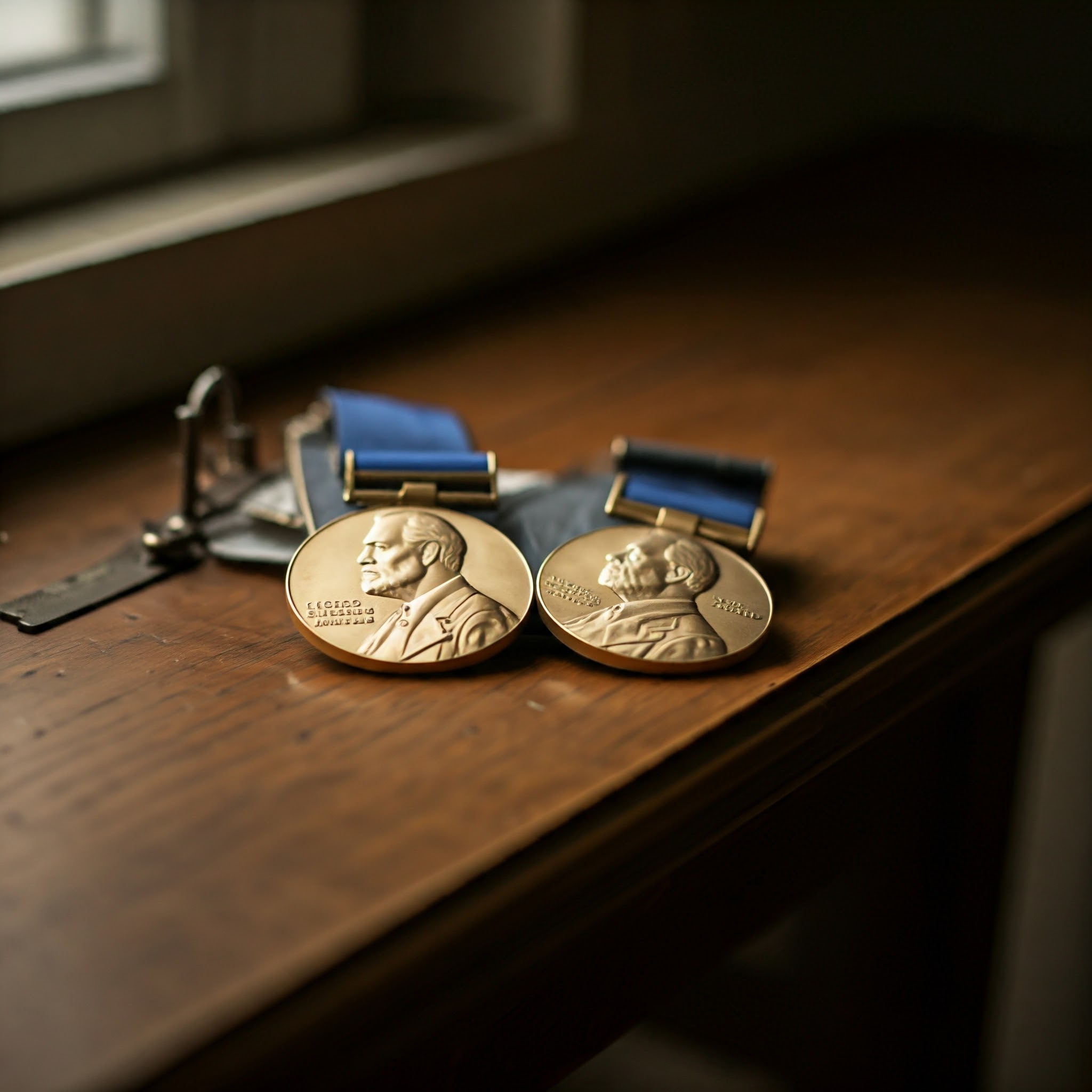
📝 Introduction
The Curie family occupies a unique place in the history of modern science. Across two generations, Marie Curie, Pierre Curie, their daughter Irène Joliot-Curie, and Irène’s husband Frédéric Joliot all became Nobel laureates for research connected with radioactivity and nuclear science.
For competitive examinations, the most important fact is that Marie Curie received two Nobel Prizes—Physics in 1903 and Chemistry in 1911. Pierre shared the 1903 Physics Prize; Irène and Frédéric jointly received the 1935 Chemistry Prize.
4 individual Nobel laureates
5 individual Nobel laureate recognitions/shares
Across 3 Nobel Prize awards: Physics 1903, Chemistry 1911 and Chemistry 1935.
It is common to say that the “Curie family won five Nobel Prizes.” More precisely, four family members appear as Nobel laureates, with Marie appearing twice. The family’s laureate recognitions arise from three Nobel Prize awards/years.
👨👩👧 Curie Family Nobel Tree
Physics – 1903
Chemistry – 1911
2 Nobel Prizes
Physics – 1903
1 Nobel Prize
Chemistry – 1935
1 Nobel Prize
Chemistry – 1935
1 Nobel Prize
📊 Curie Family Nobel Prizes – Master Table
| Laureate | Relationship | Year | Category | Main Nobel-recognized Work | Prize Share |
|---|---|---|---|---|---|
| Marie Curie | Mother | 1903 | Physics | Joint research on radiation phenomena discovered by Henri Becquerel | 1/4 |
| Pierre Curie | Father / Marie’s husband | 1903 | Physics | Joint research on radiation phenomena | 1/4 |
| Marie Curie | Mother | 1911 | Chemistry | Discovery of radium and polonium; isolation and study of radium | 1/1 |
| Irène Joliot-Curie | Daughter of Marie & Pierre | 1935 | Chemistry | Synthesis of new radioactive elements / artificial radioactivity | 1/2 |
| Frédéric Joliot | Irène’s husband | 1935 | Chemistry | Synthesis of new radioactive elements / artificial radioactivity | 1/2 |
⚛️ Marie Curie – Nobel Prize in Physics 1903
The 1903 Nobel Prize in Physics was awarded to Henri Becquerel, Pierre Curie and Marie Curie. It recognized Becquerel’s discovery of spontaneous radioactivity and the Curies’ joint investigations of radiation phenomena.
Henri Becquerel → 1/2
Pierre Curie → 1/4
Marie Curie → 1/4
The prize was not divided equally into three parts.
Marie Curie became the first woman ever to receive a Nobel Prize. Nobel records also identify her as the only woman to have been honoured twice through 2025.
🧪 Marie Curie – Nobel Prize in Chemistry 1911
Marie Curie received the 1911 Nobel Prize in Chemistry alone. The prize recognized her services to chemistry through the discovery of radium and polonium, the isolation of radium, and the study of the nature and compounds of radium.
Marie Curie became the first person ever to receive two Nobel Prizes.
Marie also helped establish the vocabulary of the field. In her Nobel lecture she explained that she used the term “radioactive” for elements emitting the radiation and called the property “radioactivity.”
Polonium – Poland Connection
Polonium was named after Poland, Marie Curie’s country of birth. Nobel material records that Marie and Pierre discovered polonium and radium in 1898.
Polonium → Poland → Marie Curie
Radium → Radiation / rays
👨🔬 Pierre Curie – Nobel Prize in Physics 1903
Pierre Curie shared the 1903 Nobel Prize in Physics with Marie Curie as part of the half of the prize awarded jointly to the couple. Their investigations were inspired by Henri Becquerel’s 1896 discovery of radioactivity.
Pierre was already an important physicist before the Nobel-recognized radioactivity research. His scientific work included studies of magnetism, crystal physics and piezoelectricity. He died in a street accident in Paris on 19 April 1906.
☢️ Irène Joliot-Curie & Frédéric Joliot – Chemistry 1935
The scientific legacy continued through Marie and Pierre’s daughter Irène Joliot-Curie and her husband Frédéric Joliot. They jointly received the 1935 Nobel Prize in Chemistry “in recognition of their synthesis of new radioactive elements.”
In 1934, the pair bombarded aluminium with alpha particles. The transformed material continued emitting radiation even after the external radioactive source was removed. Their experiments showed that a normally stable element could be transformed into an artificially radioactive isotope.
Irène Joliot-Curie + Frédéric Joliot → Artificial Radioactivity → Nobel Prize in Chemistry 1935.
🔬 Natural vs Artificial Radioactivity
| Concept | Associated Scientist(s) | Exam Meaning |
|---|---|---|
| Spontaneous / Natural Radioactivity | Henri Becquerel | Radioactive emissions occur naturally from unstable material; Becquerel’s 1896 discovery initiated the field. |
| Radioactivity Research | Marie & Pierre Curie | Systematic investigation led to discovery of polonium and radium. |
| Artificial Radioactivity | Irène Joliot-Curie & Frédéric Joliot | Stable material was converted into radioactive isotopes in the laboratory. |
📅 Curie Family Timeline
🏅 Marie Curie’s Major Nobel Records
- First woman to receive a Nobel Prize – Physics, 1903.
- First person to receive two Nobel Prizes – second award in 1911.
- Received Nobel Prizes in two different scientific categories: Physics and Chemistry.
- As of Nobel records through 2025, Marie Curie remains the only woman awarded the Nobel Prize twice.
- Her daughter Irène also became a Nobel laureate.
👪 Important Nobel Family Relationships
| Relationship | Nobel Laureates |
|---|---|
| Husband & Wife | Marie Curie + Pierre Curie – Physics 1903 |
| Mother & Daughter | Marie Curie + Irène Joliot-Curie |
| Father & Daughter | Pierre Curie + Irène Joliot-Curie |
| Husband & Wife | Irène Joliot-Curie + Frédéric Joliot – Chemistry 1935 |
⚠️ Do Not Confuse – Important Exam Traps
| Common Confusion | Correct Fact |
|---|---|
| Marie Curie alone won the 1903 Physics Prize. | No. It was awarded to Henri Becquerel, Pierre Curie and Marie Curie. |
| The 1903 prize was equally divided among three scientists. | No. Becquerel received 1/2; Pierre and Marie received 1/4 each. |
| Marie’s second Nobel was Physics. | No. Her second Nobel was Chemistry in 1911. |
| Irène won the Nobel Prize for discovering radium. | No. Irène and Frédéric were honoured for synthesis of new radioactive elements / artificial radioactivity. |
| Marie Curie discovered radioactivity. | Henri Becquerel discovered spontaneous radioactivity; Marie and Pierre greatly developed the field. |
| Frédéric Joliot was Marie Curie’s son. | No. He was her son-in-law, married to Irène. |
| Ève Curie was a Nobel laureate. | No. Marie’s younger daughter Ève was not a Nobel laureate. |
Ève Curie married Henry R. Labouisse. As Executive Director of UNICEF, Labouisse received the 1965 Nobel Peace Prize on UNICEF’s behalf; he was not the individual Nobel Peace Prize laureate.
🎯 Key Facts for Competitive Exams
| S.No. | Exam Fact | Correct Answer |
|---|---|---|
| 1 | First woman Nobel laureate | Marie Curie – 1903 |
| 2 | Marie Curie’s first Nobel category | Physics |
| 3 | Marie Curie’s second Nobel category | Chemistry |
| 4 | 1903 Nobel co-laureates | Henri Becquerel, Pierre Curie, Marie Curie |
| 5 | Elements linked with Marie & Pierre | Polonium and Radium |
| 6 | Polonium named after | Poland |
| 7 | Artificial radioactivity | Irène Joliot-Curie & Frédéric Joliot |
| 8 | Irène’s Nobel year | 1935 |
| 9 | Irène’s Nobel category | Chemistry |
| 10 | Marie Curie’s historic double | Physics 1903 + Chemistry 1911 |
🧠 One-Minute Quick Revision
- Henri Becquerel: spontaneous radioactivity.
- Marie + Pierre: major research on radiation phenomena.
- Polonium + Radium: discovered by Marie and Pierre in 1898.
- 1903 Physics: Becquerel + Pierre + Marie.
- Marie: first woman Nobel laureate.
- 1911 Chemistry: Marie Curie alone.
- Marie: first person to win two Nobel Prizes.
- Irène: daughter of Marie and Pierre.
- Frédéric: husband of Irène.
- 1935 Chemistry: Irène + Frédéric.
- 1935 discovery: artificial radioactivity / synthesis of new radioactive elements.
- Curie/Joliot-Curie family: four individual Nobel laureates.
1903 → Marie + Pierre (Physics) | 1911 → Marie (Chemistry) | 1935 → Irène + Frédéric (Chemistry).
📝 10 Important MCQs
✅ Show Answer
Answer: B – Marie Curie. She received the Nobel Prize in Physics in 1903.
✅ Show Answer
Answer: C – Physics.
✅ Show Answer
Answer: B.
✅ Show Answer
Answer: C – 1911.
✅ Show Answer
Answer: B – Chemistry.
✅ Show Answer
Answer: B – Polonium and Radium.
✅ Show Answer
Answer: B – Poland.
✅ Show Answer
Answer: C – Irène Joliot-Curie and Frédéric Joliot.
✅ Show Answer
Answer: A.
✅ Show Answer
Answer: C – Four. Marie Curie, Pierre Curie, Irène Joliot-Curie and Frédéric Joliot.
❓ Frequently Asked Questions
1. How many Nobel Prizes did Marie Curie win?
Marie Curie won two Nobel Prizes: Physics in 1903 and Chemistry in 1911.
2. Was Marie Curie the first person to win two Nobel Prizes?
Yes. Nobel Prize records describe Marie Curie as the first person ever to be awarded two Nobel Prizes.
3. Who discovered radioactivity?
Henri Becquerel discovered spontaneous radioactivity in 1896. Marie and Pierre Curie greatly expanded the research and discovered polonium and radium.
4. Who discovered artificial radioactivity?
Irène Joliot-Curie and Frédéric Joliot demonstrated artificial radioactivity and received the 1935 Nobel Prize in Chemistry for synthesis of new radioactive elements.
5. How many members of the Curie family were Nobel laureates?
Four individual family members were Nobel laureates: Marie Curie, Pierre Curie, Irène Joliot-Curie and Frédéric Joliot.
6. Was Ève Curie a Nobel laureate?
No. Ève Curie was a writer and the younger daughter of Marie and Pierre. Her husband, Henry Labouisse, later received the 1965 Nobel Peace Prize on behalf of UNICEF as its executive director.
📚 Reliable Sources for Students
- NobelPrize.org – Nobel Prize in Physics 1903.
- NobelPrize.org – Marie Curie, Physics 1903.
- NobelPrize.org – Marie Curie, Chemistry 1911.
- NobelPrize.org – Pierre Curie, Physics 1903.
- NobelPrize.org – Nobel Prize in Chemistry 1935.
- NobelPrize.org – Frédéric Joliot, Chemistry 1935.
- NobelPrize.org – Irène Joliot-Curie.
- NobelPrize.org – Nobel Prize family facts.
🧠 Conclusion
The Curie and Joliot-Curie family demonstrates how one scientific tradition can influence more than one generation. Marie and Pierre Curie helped establish the scientific study of radioactivity, while Irène and Frédéric extended that legacy by creating artificial radioactive isotopes in the laboratory.
For competitive examinations, remember the simple sequence: 1903 Physics – Marie & Pierre; 1911 Chemistry – Marie; 1935 Chemistry – Irène & Frédéric. Also remember that Henri Becquerel, not Marie Curie, made the original discovery of spontaneous radioactivity.
Marie: Physics 1903 + Chemistry 1911 | Pierre: Physics 1903 | Irène + Frédéric: Chemistry 1935 | Artificial Radioactivity → Irène & Frédéric.
Educational Static GK and General Science content verified against NobelPrize.org records. Updated on 20 August 2026.
*****
Comments
Post a Comment